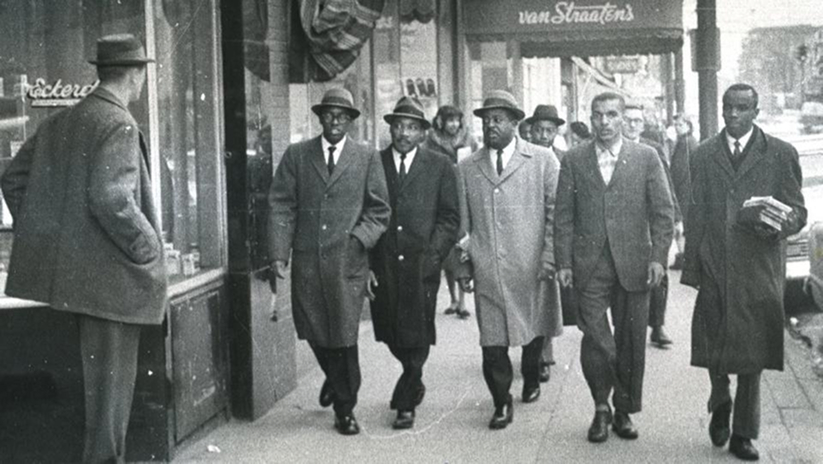
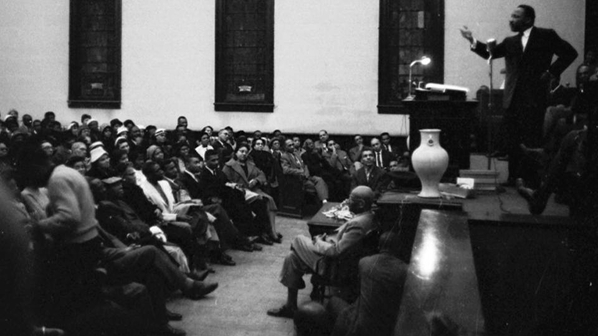
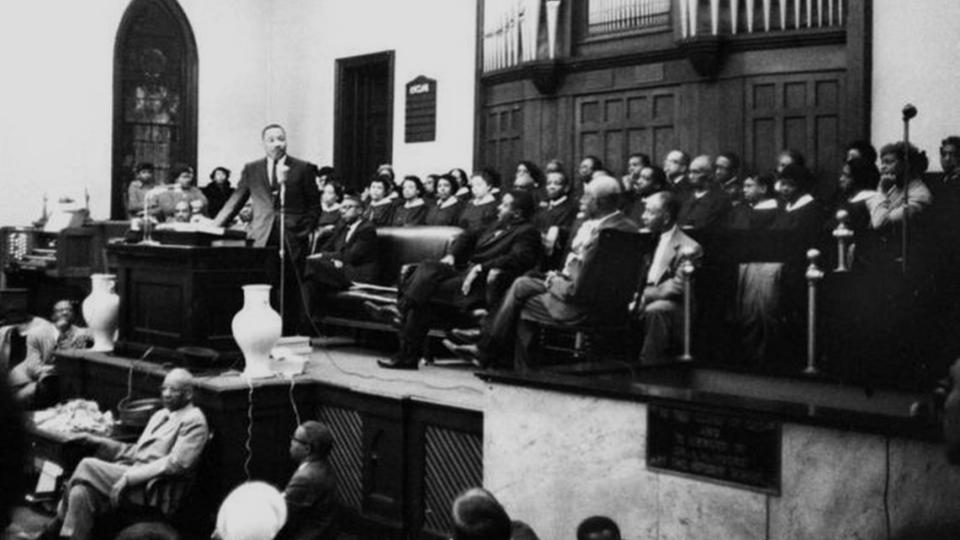
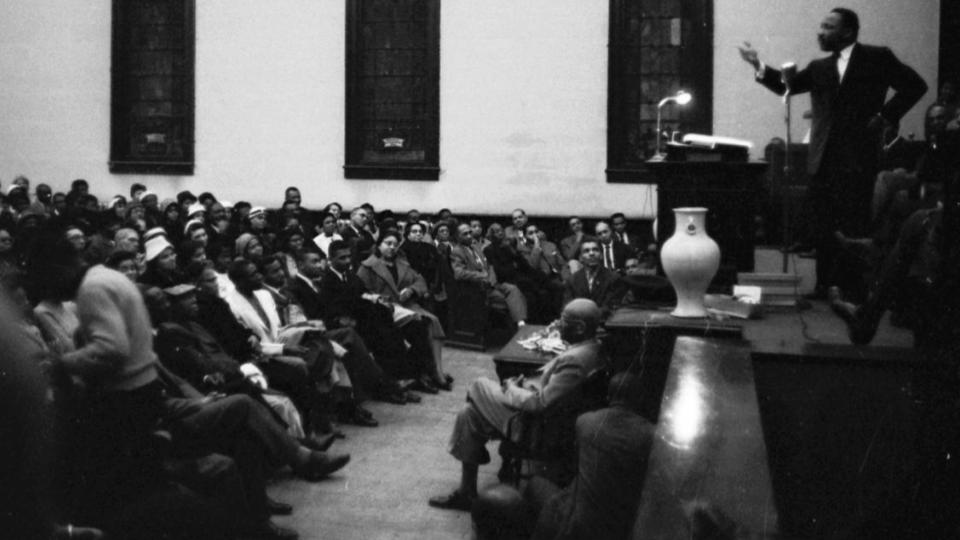
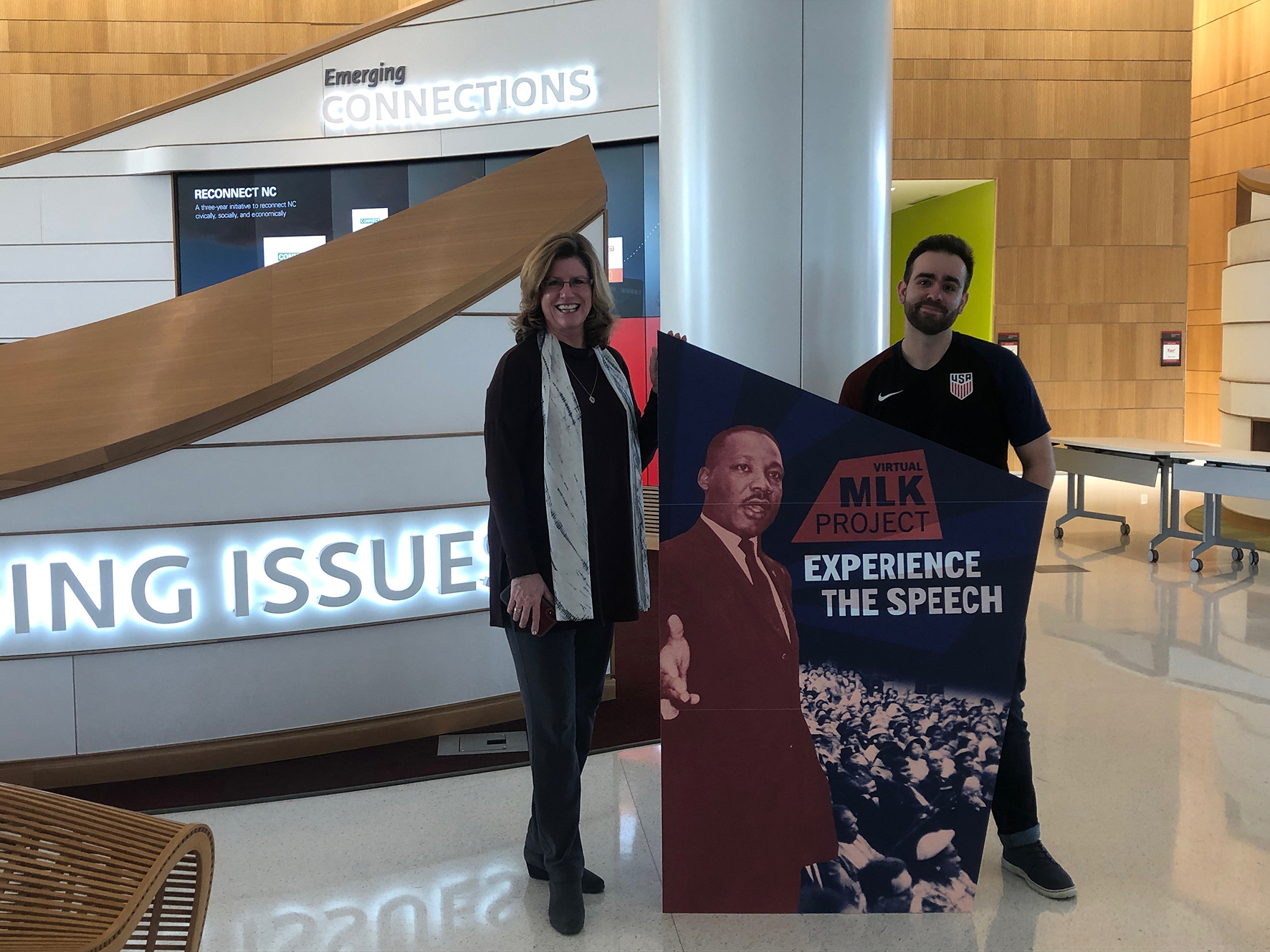
This article places the role of agency (“So she made one”) squarely on me, Victoria Gallagher. In terms of my own positionality, I am what is referred to as the Principle Investigator/Lead Scholar for the vMLK Project. I am also a white woman who grew up in the city of Detroit and have now lived in the U.S. South for over 35 years. I am a woman who directly and indirectly experienced the way race, gender, and class shaped and reshaped my city(ies), the communities in which I grew up and in which I now live and work, and my relationships with classmates, neighbors, colleagues, family, and friends.
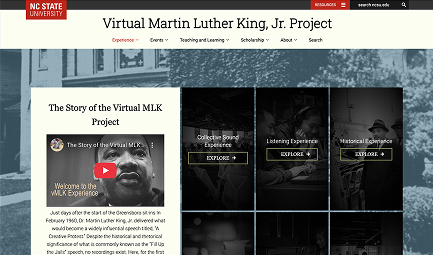
Similarly, in 2023, WNBC-TV News reported on an exhibition of the vMLK Project at Molloy University for local High School Students on Long Island. The news report stated that Dr. Max Renner brought his virtual project to nearly 200 students from Nassau County. The coverage from WNBC and several other local news outlets placed ownership of the project firmly on me, Max Renner, a cisgender gay white man from central Illinois now living and working in New York. Although I am a Co-Principal Investigator for the vMLK Project, this project is not mine. Growing up in Illinois and during the course of my academic career, I have seen the ways in which research has too often taken from communities, while offering little or nothing in return; an extractive tendency that allows discussions of projects and projects themselves to be seen as owned by researchers. It is our goal to intentionally contend with this extractive impulse by examining/foregrounding how agency works within this project and within this publication.
These attributions of agency, exemplified in and amplified by the media coverage above, mean that our individual motivations, privileges, backgrounds, expertise, and positions are essential to the project and to its power dynamics, to its contributions and consequences. Indeed, as authors, we – Vicki and Max – are conscious that our identities as scholars and professors at institutions of higher education in the United States mean that moments of opportunity and of our agency in relation to crafting and/or living into such moments, are unique to us individually and also fully enmeshed in larger systems of power relations and identity.
Recognizing/stating our positionalities as well as the capacity building goals of the project is, we hope, instructive. From the start, our goal was to build capacity for everyone on the project/production team and our partners, as the project was developed iteratively over time during a critical 10-year period in the development of digital technologies.
A more fulsome representation of the project and of the community who developed it is depicted in our acknowledgments section and a timeline of the 62+ contributors and contributions to the vMLK Project which captures the range of both.
From the collaborative efforts of the White Rock Baptist Church pastoral staff, its deacons and congregation members; to the remarkable design, technical, and theoretical work of Dr. Keon Pettiway; to the vision and innovative VR artistry of Dr. Derek Ham and Shadrick Addey; the historical and theoretical contributions of Drs. Kim Gallon, Nishani Frazier, and Clayborne Carson; and the oral history provided by Ms. Virginia Williams, building capacity through this project means centering Black people, their experiences, expertise, and contributions and ensuring full agency in relation to the scope, goals, and trajectory of the project. As Susan Wells suggests, this kind of heterogeneous and spacious understanding of agency in relation to positionality is at the heart of kairos and illustrates the complex relations of environments and networks that support a kairotic practice.
List of Acknowledgements/Contributors
As you explore this digital publication, we invite you to engage in your own discovery of the role of agency and positionality in relation to exploring and realizing opportune moments, in other words, in developing a kairotic practice that can sustain and transform you and your community.